Apricot Oil for Skin: The Lightweight Oil Your Dry Skin May Love
Discover why apricot oil is loved in natural skincare, how it supports dry and rough-feeling skin, and why this lightweight botanical oil is often used in balms, body care, and simple moisturizing routines.escription.
Omayra Mangual
5/1/20267 min read
Some skincare ingredients feel heavy before you even use them.
You see them on a label and immediately wonder, “Is this going to feel greasy?” or “Is this going to sit on top of my skin all day?”
That is one reason I love apricot oil.
Apricot oil has a softer, lighter feel compared to many heavier oils. It is gentle, smooth, and easy to love in body care. It does not need a dramatic introduction. It does not need to be overhyped. It simply brings a beautiful, skin-softening feel to a simple skincare routine.
If your skin often feels dry, tight, rough, or overworked, apricot oil is an ingredient worth knowing about.
What Is Apricot Oil?
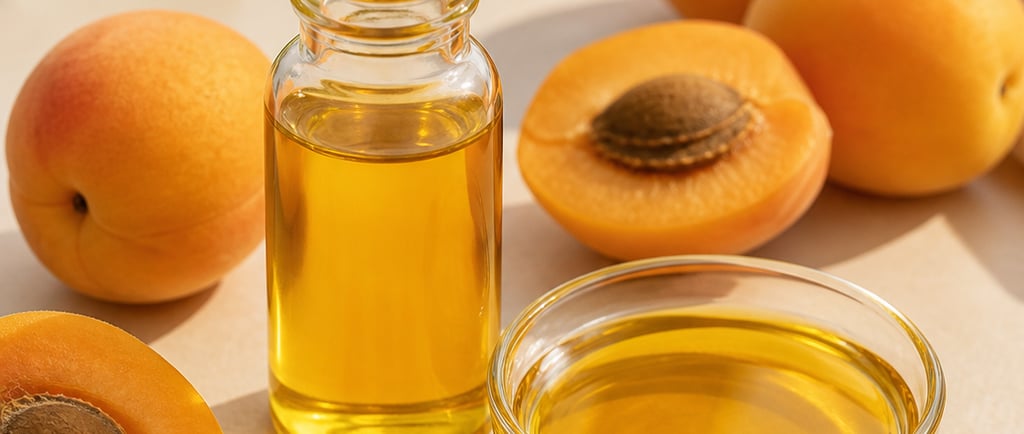
Apricot oil usually comes from the kernel inside the apricot seed. The botanical name for apricot is Prunus armeniaca. In skincare, you may see it listed as Prunus Armeniaca Kernel Oil.
Apricot kernel oil is valued for its fatty acid profile, especially its unsaturated fatty acids. Research on apricot kernels notes that the oil is rich in unsaturated fatty acids, with a high proportion of oleic acid, along with compounds such as phenols and tocopherols.
In simple words, apricot oil is a plant-based oil that works beautifully in skincare because it helps soften and condition the skin.
It is often used in body oils, face oils, creams, lotions, massage oils, salves, and balms. It has a smooth feel that makes it useful when you want moisture without an overly heavy finish.
Why Apricot Oil Feels So Good on Dry Skin
Dry skin can feel frustrating.
One day your hands feel fine. The next day they feel tight, rough, or uncomfortable. Your elbows may look dull. Your heels may feel rough. Your skin may need more than a quick layer of lotion.
This is where oils can be helpful in a skincare routine.
DermNet explains that emollients help soften and smooth the skin, while occlusive ingredients can help reduce water loss by forming a protective layer on the skin’s surface.
Apricot oil fits beautifully into this conversation because it brings a soft, conditioning feel to the skin. It helps make dry areas feel smoother and more cared for.
That is what people want from a simple skincare oil.
Not a complicated promise.
Not a miracle claim.
Just skin that feels softer, smoother, and more comfortable.
Apricot Oil Is Lightweight but Nourishing
One of the best things about apricot oil is the texture.
Some oils feel too thick. Some feel too sticky. Some make people nervous because they do not want to feel greasy.
Apricot oil has a more elegant feel. It is commonly used in cosmetic formulations because it works well as a carrier oil and blends nicely with other ingredients.
This matters because skincare should feel good enough to use consistently. A product can have a beautiful ingredient list, but if the texture feels unpleasant, people will not keep using it.
Apricot oil helps create a formula that feels smooth, rich, and comforting without feeling overly complicated.
That is why it works so well in body care and balm-style products.
Why Apricot Oil Is Used in Balms
A balm needs a good oil base.
The oil is what gives the balm its softness, glide, and skin-conditioning feel. Without a good oil, a balm can feel too waxy, too stiff, or too hard to apply.
Apricot oil helps give a balm that smooth, melt-into-the-skin feeling.
This is important for areas like:
Hands
Knuckles
Elbows
Knees
Heels
Cuticles
Dry patches
Rough areas from daily wear
These are the areas where skin often needs something richer than a light lotion.
When apricot oil is used in a balm, it helps the product spread more easily. It helps the balm feel softer on the skin. It also gives the formula a more comforting, nourishing feel.
Why Apricot Oil Works Well With Herbal Infusions
Apricot oil is also a beautiful oil for herbal infusions.
An herbal infusion is when herbs are allowed to sit in oil over time. The oil becomes the base that carries the character of the herbs into the final product.
This is one reason apricot oil is special in natural skincare. It is not only useful on its own. It can also be used as the foundation for slow, intentional herbal preparation.
That slow process matters.
We live in a world where everything is rushed. Fast routines. Fast beauty trends. Fast products. But there is something meaningful about skincare that takes time.
A slow-infused oil feels more thoughtful. It feels more connected to traditional herbal care. It gives the final balm a story and a purpose.
That is why apricot oil is used in NouriBalm: Skin Relief-Simplified. It serves as the oil base for the slow infusion. You can learn more about the balm here:
Apricot Oil and the Skin Barrier
The skin barrier is one of the most important parts of healthy-looking skin.
When the skin barrier feels stressed, your skin may feel dry, tight, rough, or uncomfortable. A good skincare routine should help support the skin’s surface by keeping it moisturized and protected.
Plant oils are often used in skincare because many contain fatty acids and other compounds that can support the feel and appearance of the skin. A review on topical plant oils discusses how plant oils may support skin barrier repair and have antioxidant and anti-inflammatory properties, depending on the oil and its composition.
That does not mean apricot oil should be treated like medicine. It should not be sold as a cure for skin conditions. But it does belong in the skincare conversation because it helps create products that feel softening, nourishing, and comforting.
For everyday dry skin care, that matters.
What Makes Apricot Oil Different From Heavier Oils?
Every oil has its own personality.
Some oils feel thick and heavy. Some are better for very dry areas. Some are better for massage. Some feel lighter and more elegant.
Apricot oil is often loved because it feels light but still moisturizing. That makes it useful for people who want skin softness without a heavy, greasy feeling.
This is one reason it can work well in a balm. The beeswax or waxy part of a balm gives structure, while the oil gives softness and glide. Apricot oil helps balance that texture.
The result is a balm that feels rich but not messy.
That matters because customers do not just buy ingredients. They buy the feeling.
They want the balm to glide.
They want it to melt.
They want it to feel comforting.
They want their skin to feel cared for.
Apricot oil helps create that experience.
How to Use Apricot Oil in a Skin Routine
Apricot oil can be used in many simple ways.
You may find it in body oils, creams, lotions, massage blends, cuticle oils, and balms. In a balm, it is especially useful for targeted dry areas.
Here are simple ways to use apricot-oil-based skincare:
After Washing Your Hands
Frequent handwashing can leave the skin feeling dry or tight. A balm made with apricot oil can help hands feel softer and more comfortable.
After Showering
Apply a small amount to elbows, knees, heels, or rough areas while the skin is clean.
Before Bed
Nighttime is a beautiful time to use a richer balm. Apply it to hands, heels, cuticles, or dry patches before sleep.
On Cuticles
A tiny amount can help cuticles feel softer and more conditioned.
On Rough Areas
Use it where lotion does not seem to last long enough.
The key is consistency. Skin care does not have to be complicated, but it does need to be repeated.
Who May Love Apricot Oil in Skincare?
Apricot oil may appeal to people who want a simple, gentle-feeling oil in their skincare routine.
It may be especially appealing if you:
Have dry or rough-feeling skin.
Want a lighter oil feel.
Prefer simple skincare ingredients.
Like botanical body care.
Want a richer option than lotion.
Use balms on hands, heels, elbows, or knees.
Prefer skincare that feels soft and smooth, not overly greasy.
Apricot oil is not loud. It is not flashy. It is not trying too hard.
That is part of its beauty.
It is simple, useful, and easy to include in everyday skincare.
What to Look for in an Apricot Oil Product
When choosing a product that contains apricot oil, look for a formula that makes sense.
A good product should tell you:
What the product is for.
Where to use it.
How to use it.
What ingredients are inside.
Whether it is for external use only.
Whether you should patch test first.
Simple skincare should still be clear skincare.
Do not just buy something because it says “natural.” Natural does not automatically mean perfect for everyone. Your skin is personal. Your routine should respect that.
That is why patch testing matters.
A Gentle Safety Note
Apricot oil is used in many cosmetic products, but everyone’s skin is different.
Before using any new skincare product, apply a small amount to a small area of skin first. Wait and see how your skin responds.
Avoid using skincare products on deep wounds, infected skin, severe burns, or serious skin concerns unless a qualified healthcare professional tells you otherwise.
If you have allergies, very sensitive skin, or a diagnosed skin condition, it is always smart to check with a professional before trying something new.
Simple skincare should still be safe skincare.
Final Thoughts
Apricot oil is one of those ingredients that does not need to scream for attention.
It is smooth.
It is lightweight.
It is nourishing.
It helps dry skin feel softer.
It works beautifully in balms.
It creates a gentle, comforting skin feel.
For people who want a simple, plant-based oil in their skincare routine, apricot oil is worth knowing about.
It brings softness without feeling too heavy. It supports a richer balm texture. It pairs beautifully with slow herbal infusions. And it helps create the kind of skincare product people actually want to reach for again and again.
Sometimes the best skincare ingredients are not the loudest ones.
Sometimes they are the ones that simply make sense.
Apricot oil is one of those ingredients.
Sources
Lin, T. K., Zhong, L., & Santiago, J. L. (2017). Anti-inflammatory and skin barrier repair effects of topical application of some plant oils. International Journal of Molecular Sciences, 19(1), 70.
Pawar, K. R., et al. (2023). Apricot kernel characterization, oil extraction, and its utilization: A review. Food Science & Nutrition.
Stryjecka, M., et al. (2019). Chemical composition and antioxidant properties of oils from the seeds of five apricot cultivars. Journal of Oleo Science.
Apricot Kernel Oil
Connect
info@bodyhealthfit.com